That’s why people often get wildly different answers. Some see 9. Others swear it’s 13. A few confidently claim 18 or more. The interesting part is that the number you see often reflects how you approach problems, not just how well you count. This puzzle highlights the variety of ways minds process visual information and demonstrates that perception can vary greatly from person to person.
What your answer might reveal (just for fun!) depends on your perspective. If you saw a smaller number (6–9), you likely focus on the big picture, spotting obvious structures quickly and preferring efficiency over overthinking. If you saw a medium number (10–13), you balance logic and creativity, noticing patterns others miss while breaking complex problems into manageable parts.
If you saw a high number (14+), you’re detail-oriented and persistent, willing to double-check your work and uncover hidden solutions. Remember, this isn’t a personality test—just a playful way to explore differences in perception. The real lesson behind the puzzle isn’t the final number. It’s the moment someone points out a triangle you completely missed, and your certainty collapses.
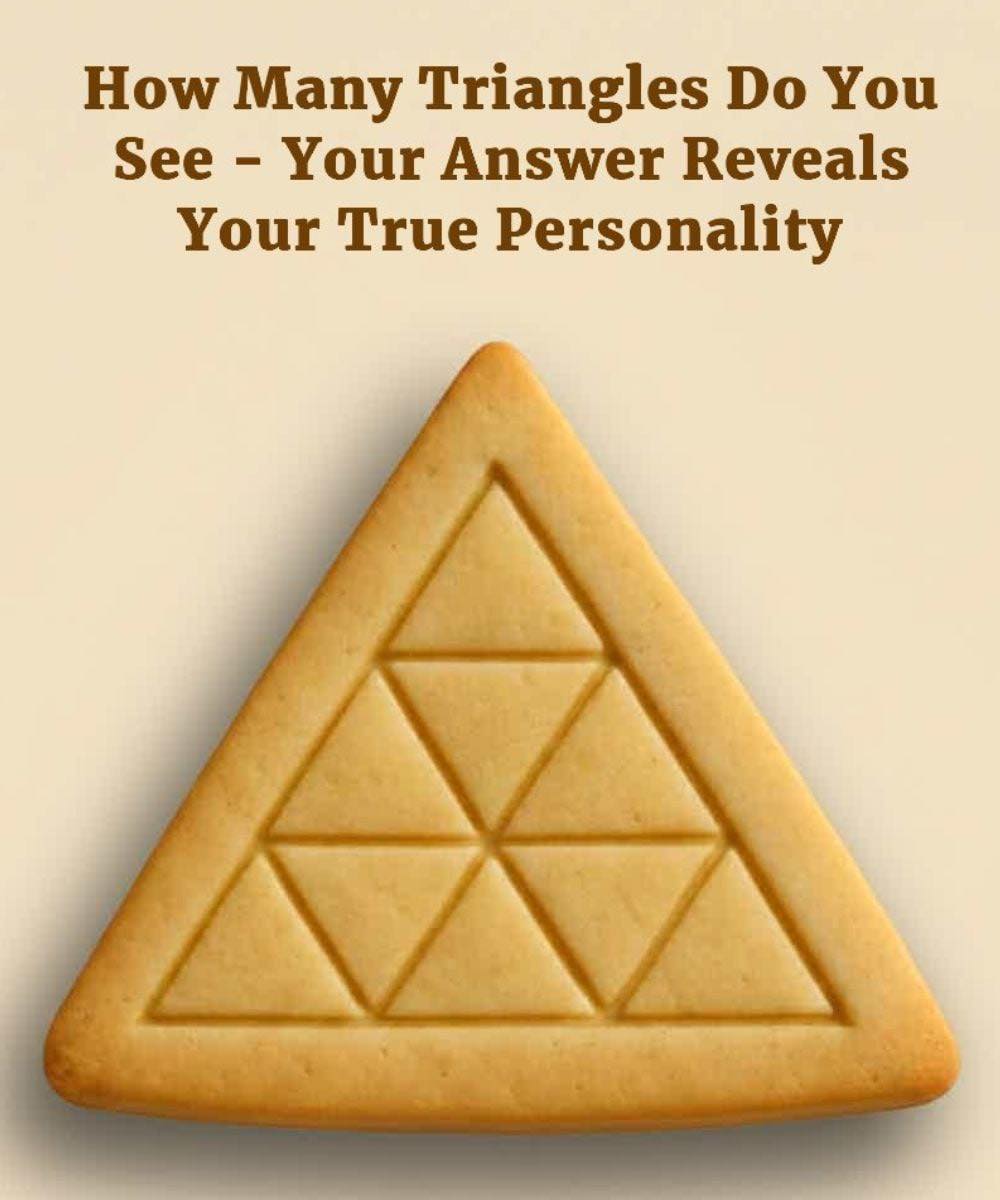
This puzzle reminds us that different perspectives matter, obvious answers aren’t always complete, and slowing down can reveal more than rushing to conclusions. So… what’s the correct answer? Most commonly accepted answers range between 13 and 18, depending on how you count individual triangles, combined triangles, inverted shapes, and overlapping forms. Many experts agree that the widely accepted answer is 18 triangles, though counting methods can change the result.
The variation happens because the brain doesn’t process visual information uniformly. Some minds prioritize obvious shapes, while others instinctively search for overlaps, hidden forms, or nested patterns. The puzzle quietly exposes how perception is shaped by habit, attention, and problem-solving style rather than raw intelligence or math ability.
For those who see a smaller number, typically between six and nine, the focus is often on the most prominent structures. This approach favors efficiency and clarity—spotting what stands out first and moving on without unnecessary complexity. It reflects a tendency to grasp the big picture quickly and avoid overanalyzing details that may not seem immediately relevant.
People who arrive at a medium count, usually around ten to thirteen, tend to balance logic with creativity. They notice secondary patterns without getting lost in them, breaking the image into manageable parts while still staying flexible in how they interpret overlapping shapes. This middle-ground approach often mirrors how they handle real-world problems: structured, but open to nuance.
Those who report higher numbers—fourteen or more—often display persistence and a strong attention to detail. They double-check, retrace lines, and search deliberately for shapes hidden within shapes. This methodical mindset values thoroughness and discovery, even if it takes more time. The satisfaction comes not from speed, but from uncovering what others might overlook.
In the end, the puzzle isn’t about which number is “correct.” It’s about the moment when someone points out a triangle you missed and your certainty dissolves. That moment reveals something universal: perception is flexible, confidence is fragile, and different viewpoints can coexist without one being wrong. The real takeaway isn’t the count—it’s the reminder that how we see often matters more than what we see.