A seemingly simple question recently sparked a surprisingly passionate debate across social media: why is there that odd, raised line or strip across bath towels? Thousands chimed in, offering both humorous theories and genuine curiosity — transforming what appeared to be a minor design detail into an unexpectedly viral topic.
This isn’t the kind of conversation that will change the world or answer life’s big philosophical questions. But much like past internet fascinations — think the infamous blue-and-black or white-and-gold dress debacle — the towel line mystery somehow captivated minds. And as it turns out, there’s a lot more to that strange line than meets the eye.
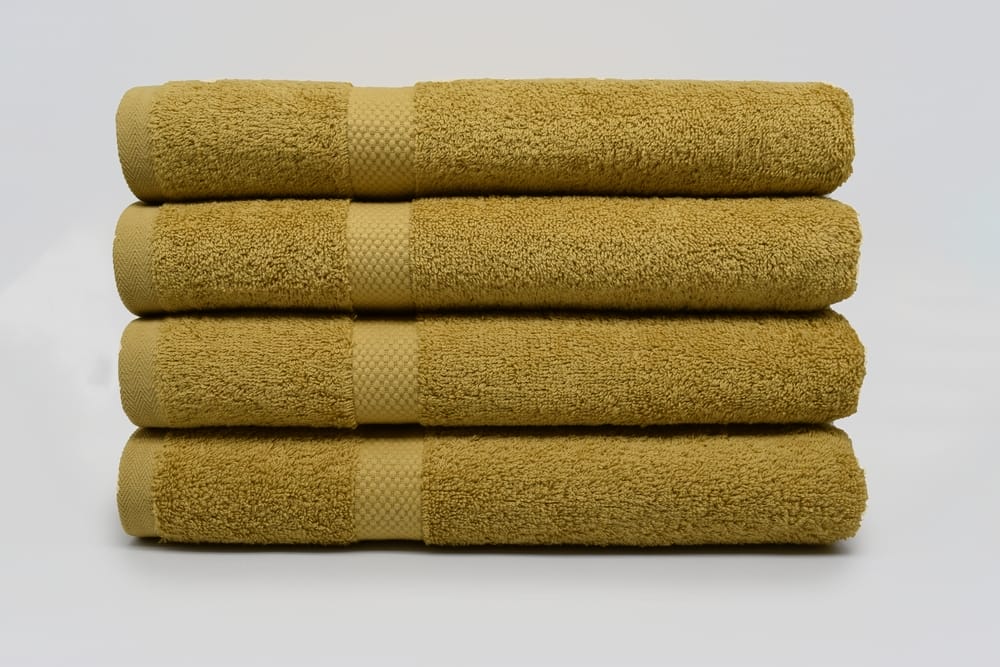
For anyone who’s stood staring at a freshly washed towel wondering, “Do I really need to clean this if I was clean when I used it?” or “Why do these horizontal stripes exist?” — you’re not alone. These questions have been bouncing around for years, but it was a recent post on X (formerly Twitter) that reignited the curiosity.
One user shared a photo of a towel with a single caption: “What’s this line for?” It quickly went viral. Responses flooded in — ranging from cheeky suggestions like “that’s the face-to-butt separation line” to the idea that the towel needed “racing stripes” to dry faster. Others proposed the line acted like a built-in crease for easy folding or was purely an aesthetic decision by towel designers.
But for those looking for a serious, no-nonsense answer, experts quickly stepped in to clear things up. And yes, there is a practical reason behind those mysterious lines.
That line is officially known as the dobby border — and it’s far more functional than decorative. According to textile professionals and sources like Towel Hub, the dobby border is a woven strip at both ends of most towels, created not for show but to improve the overall performance and longevity of the towel.
The dobby border reinforces the structural integrity of the towel, helping to prevent fraying and wear at the edges after repeated washes. This woven section also keeps the towel from becoming too bulky around the borders, ensuring it stays lightweight and remains soft and absorbent. For manufacturers, it provides an area where fancy jacquard weaving or subtle branding can be added — but the core reason is still all about function.
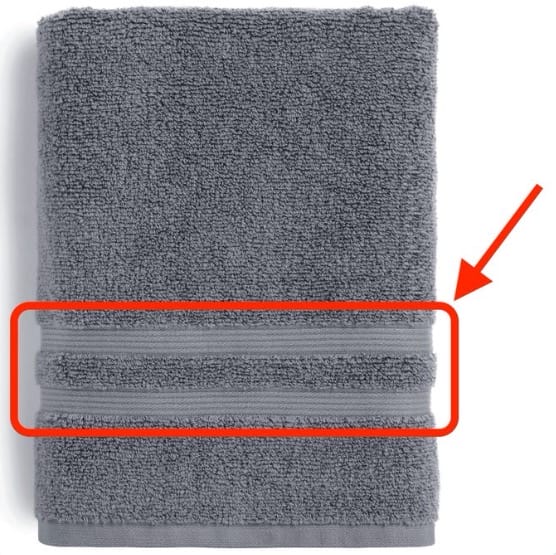
Beyond that, it does help with aesthetics. The dobby border provides a visual cue for folding, helps towels hang more neatly, and adds a clean, symmetrical finish that makes towels look more refined, whether they’re stacked in a linen closet or draped over a bathroom rack.
As Towel Hub notes, “Absorbency is one of the most important qualities of a good towel, but achieving the perfect balance between thickness and performance can be challenging. The dobby border helps maintain structure and improve overall function without compromising softness.”
So the next time you reach for your towel, give a little nod to the dobby border. It’s not just there to look pretty — it’s quietly doing the work of keeping your towel strong, shapely, and stylish through hundreds of drying sessions.
And hey, who doesn’t love learning the answer to one of life’s oddly satisfying everyday mysteries? Be sure to pass it along — someone else is probably wondering the same thing.