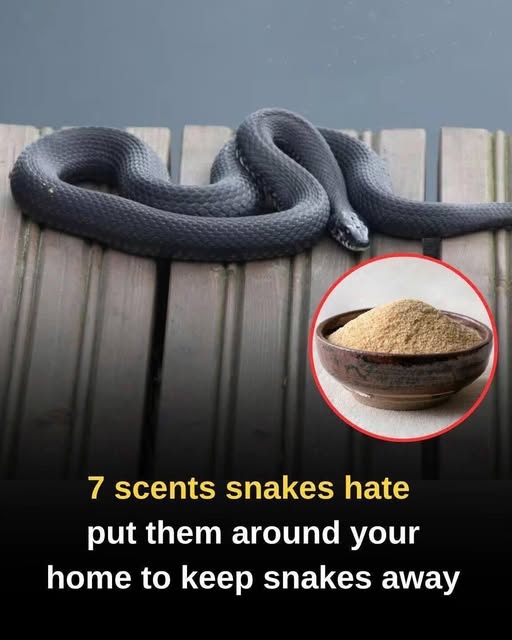
Snakes have fascinated and frightened humans for centuries, often eliciting reactions ranging from curiosity to outright panic when they appear near homes. While most snakes are harmless and play a crucial ecological role by controlling rodent and insect populations, their sudden presence on a porch, garden, or shed can create understandable anxiety. The desire to prevent snakes from venturing too close has led homeowners to search for natural, non-lethal deterrents, and among the most popular are strong scents. From ammonia and vinegar to essential oils such as cinnamon, clove, lemongrass, and even garlic, these remedies are widely used to discourage snakes from entering human spaces. Snakes rely on chemical sensing rather than sight or hearing, using specialized organs to detect environmental cues. This unique biology forms the basis for the theory that intense odors can create discomfort or confusion, prompting snakes to leave the area. While many homeowners have experimented with these methods, experts emphasize that scent deterrents are temporary solutions, useful in conjunction with more permanent habitat and maintenance strategies rather than as standalone measures. Understanding both the benefits and limitations of these natural remedies is essential for anyone looking to coexist safely with local wildlife while protecting their home and family.
Ammonia is one of the most commonly cited snake deterrents due to its strong, pungent odor, which can overwhelm a snake’s chemical senses. When applied near crawl spaces, sheds, doorways, or other potential entry points, ammonia can make an environment uncomfortable enough to encourage snakes to retreat. The chemical’s intensity irritates the Jacobson’s organ, a specialized sensory system snakes use to detect chemical signals, which may create a temporary avoidance behavior. However, ammonia has significant limitations. Its fumes evaporate quickly, making repeated application necessary for sustained effectiveness. Furthermore, the chemical poses safety risks to humans, pets, and other wildlife. Direct contact or inhalation can irritate skin, eyes, and lungs, and excessive exposure may have long-term health effects. Experts recommend using ammonia with caution, applying it only outdoors in well-ventilated areas and away from places children or pets can access. While ammonia may offer a short-term solution for discouraging snakes from lingering in a specific spot, it cannot replace fundamental measures such as eliminating potential shelters, sealing gaps, and reducing the presence of rodents that attract snakes in the first place. In many cases, homeowners find that ammonia is most effective when combined with other, safer natural deterrents and regular yard maintenance rather than as a primary preventive method.
Essential oils have emerged as another popular choice for homeowners seeking natural snake deterrents. Oils such as cinnamon, clove, and citronella contain volatile compounds that can overstimulate a snake’s chemical receptors, creating temporary discomfort and prompting them to move on. These oils can be diluted with water and sprayed along foundations, garden beds, doorways, or other areas where snakes might enter. Similarly, lemongrass and other citrus-based oils can interfere with a snake’s ability to follow scent trails, further discouraging their presence. While essential oils are generally safer than ammonia, their effectiveness is limited by environmental conditions. Rain, humidity, and exposure to sunlight rapidly break down the compounds, requiring frequent reapplication. Some homeowners experiment with creating a barrier using cotton balls soaked in essential oils or by planting aromatic plants such as marigolds, which repel insects and indirectly reduce rodent populations, decreasing a primary food source for snakes. While the scientific evidence supporting these methods is mixed, many people report anecdotal success when combining scent deterrents with habitat management. Experts caution that relying solely on oils and scents is unlikely to keep snakes away permanently, emphasizing the importance of consistent yard maintenance, sealing potential entry points, and monitoring local wildlife activity for long-term results.
Garlic and onions have long been recognized as natural repellents due to their sulfur-based compounds, which release pungent odors when crushed or applied to the environment. Snakes, sensitive to chemical cues, may find these scents unpleasant or disorienting, making areas where garlic or onion is present less attractive. Some homeowners create sprays or sprinkle crushed garlic around sheds, gardens, or fence lines to deter snakes. Similarly, vinegar is occasionally used in damp areas, leveraging its acidic properties to create an uncomfortable environment. While these methods are low-risk, they have limitations similar to other scent-based deterrents: they are temporary, require frequent reapplication, and do not address the root causes of snake visits, such as the availability of shelter, water, or food sources. Citronella, lemongrass, and other aromatic plants can complement these approaches, providing both natural scents and landscape benefits, such as insect repelling properties. Despite the appeal of using household items or plant-based oils, experts stress that snakes are adaptable and will often tolerate unpleasant smells if the surrounding environment remains conducive to their needs. Consequently, these remedies should be seen as part of a comprehensive strategy rather than a standalone solution for snake prevention.
While natural scent deterrents may provide temporary relief, long-term snake prevention depends on careful habitat management and property maintenance. Keeping grass and vegetation trimmed, removing debris piles, storing firewood away from the home, and eliminating rodent infestations are foundational steps. Sealing gaps in foundations, vents, and door frames can prevent snakes from entering living spaces, while securing compost piles or birdfeeders reduces food sources that attract both rodents and snakes. Additionally, creating an environment that is less hospitable to snakes—such as removing water sources, using gravel or mulch instead of dense plantings near the home, and ensuring sheds and crawl spaces are tightly enclosed—can dramatically reduce encounters. Homeowners should also learn to identify local snake species, understanding which are non-venomous and beneficial versus those that may pose a risk, allowing for informed and safe decision-making when snakes are spotted. By combining habitat control with selective, temporary scent deterrents, property owners can maintain a balance that respects wildlife while minimizing unwanted encounters.
Education and caution are crucial when implementing any natural snake deterrent strategy. Homeowners should understand that no smell, chemical, or plant offers permanent protection. Overreliance on a single method may create a false sense of security, increasing the likelihood of unintended encounters. Safety is paramount: chemicals like ammonia should be handled with gloves and kept out of reach of children and pets, while essential oils should be diluted appropriately to prevent skin irritation or plant damage. Observing local wildlife patterns and maintaining a clean, rodent-free environment remains the most reliable approach. For those who prefer not to use chemical or strong-smelling deterrents, mechanical solutions such as fencing, mesh, and habitat modification can offer longer-lasting security. Ultimately, the goal is not to eradicate snakes, which are vital to ecosystems, but to discourage them from establishing themselves in close proximity to human habitation while coexisting safely with the natural environment.
In conclusion, while ammonia, vinegar, essential oils, garlic, lemongrass, and other strong scents may offer temporary relief from unwanted snake encounters, they are not foolproof or permanent solutions. Homeowners seeking long-term prevention should focus on eliminating attractants, securing potential shelters, and maintaining a tidy, rodent-free property. When combined with safe, non-lethal deterrents, these strategies can help reduce snake visits while allowing snakes to continue performing their important ecological roles. Understanding the biology and behavior of snakes, respecting their place in nature, and implementing a multi-layered prevention approach ensures both human safety and wildlife conservation. By integrating temporary scent barriers with consistent habitat management and vigilance, homeowners can create a safer environment, minimize stress, and enjoy outdoor spaces without fear, while still coexisting responsibly with these essential and often misunderstood reptiles.