At first glance, it looks like a simple picture… until you actually try it. A colorful optical illusion has been circulating online, challenging people to count how many circles are hidden. Some versions even suggest your total could hint at your personality—not seriously, but as a fun twist that makes the challenge addictive.
Whether you spot a few or keep discovering more, it draws you in and makes you want to compare results with friends and family. These illusions reveal how our brains naturally work. People don’t scan images the same way—some notice big shapes first, others lock onto small details. That’s why two viewers can get completely different answers.
Once someone says, “Wait… you didn’t see that circle?” it often turns into recounting, laughter, and friendly debate at how tricky and clever the image really is. They’re also a refreshing break from serious content online. No pressure, no special skill—just curiosity that sparks brief, enjoyable moments and fun conversation. People love posting totals, debating what counts as a “real” circle, and challenging friends to beat their number.
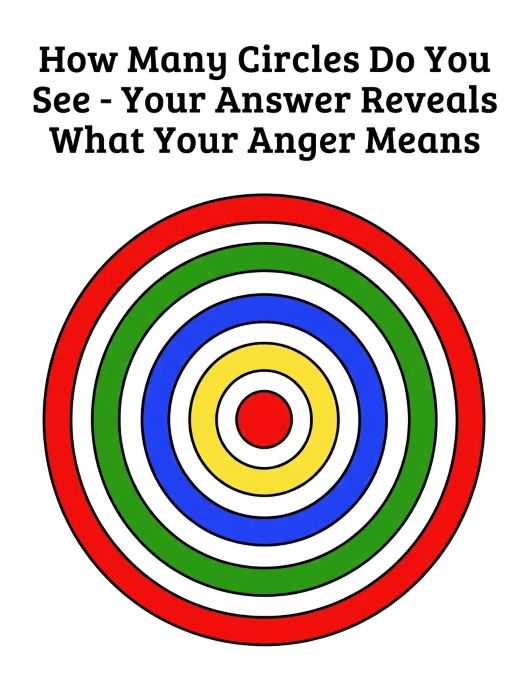 That social element helps explain why these illusions go viral so quickly: they’re fast, simple, and satisfying for everyone involved. Next time you see a “count the circles” image, take a moment and really look. Count twice, zoom in, and notice what you missed. The best part isn’t the number—it’s the pause it gives your brain, the surprise of hidden details, and the shared fun of comparing what you saw with others.
At first glance, it looks like a simple, colorful image. Just circles, overlapping shapes, maybe a bright background. Nothing complicated. Then someone asks, “How many circles do you see?” and suddenly your brain switches gears. You start counting. You recount. You zoom in. You question your first answer. And before you know it, you’re fully invested in something that seemed effortless just seconds earlier. That’s the quiet power of optical illusions—they reveal not just hidden shapes, but hidden patterns in how your mind works.
When people get different totals from the same image, it isn’t because someone is “right” and someone is “wrong.” It’s because perception is deeply personal. Your brain doesn’t passively receive information—it interprets it. The way you scan, group, and prioritize visual information says a lot about your cognitive style.
If you spotted only a few circles quickly and felt confident in your answer, you likely process visuals globally. Global processors tend to focus on the big picture first. You notice large shapes, dominant colors, and overall structure before diving into fine detail. This style is efficient. It allows you to make fast decisions and avoid getting lost in complexity. However, it can also mean smaller, embedded elements escape notice on the first pass.
If you kept finding more circles the longer you looked, you may lean toward detail-oriented processing. Detail-focused viewers instinctively scan edges, intersections, overlaps, and negative space. They’re comfortable slowing down and dissecting what others skim over. This kind of visual persistence often correlates with analytical thinking and patience. But it can also mean you occasionally overanalyze simple things.
Some people count conservatively—only perfect, obvious circles. Others include partial shapes, overlaps, or implied outlines. That difference reveals something fascinating about cognitive flexibility. Conservative counters tend to rely on clear rules and defined boundaries. Flexible counters are more open to interpretation and ambiguity. Neither approach is superior; they simply reflect how comfortable your brain is with gray areas.
These illusions also highlight how attention works. Human attention is selective and limited. Your brain filters visual input constantly, deciding what matters and what doesn’t. When you first glance at the image, your mind makes rapid assumptions about structure. Once someone says, “You missed one,” your brain reconfigures its search strategy. Suddenly, shapes you ignored before become visible. This shift demonstrates neuroplasticity in action—your brain adapting in real time.
The social element makes it even more compelling. When someone says, “Wait… you didn’t see that circle?” it triggers curiosity and mild competitive energy. That moment activates reward circuits in the brain. Discovering a new circle feels like solving a mini puzzle. Sharing your number feels like participating in a group challenge. The illusion becomes less about counting and more about connection.
Part of why these images go viral is their accessibility. You don’t need special knowledge. You don’t need to be artistic or mathematical. All you need is curiosity. In a digital world filled with heavy news and high-pressure content, a simple visual puzzle offers cognitive relief. It’s playful stimulation—engaging without being exhausting.
There’s also a psychological effect called confirmation bias at play. Once you settle on a number, your brain subconsciously defends it. When someone suggests a higher total, you might initially resist. Then you look again. And suddenly, there it is. That moment of surprise is powerful because it gently reminds you that perception is not absolute.
Optical illusions expose a fundamental truth: we don’t see reality exactly as it is—we see it as our brain interprets it. Two people can look at the same image and construct different mental models. That’s not just about vision; it reflects broader cognitive diversity. The same principle applies in conversations, problem-solving, and decision-making. Perspective shapes outcome.
If you tend to scan quickly and move on, you may be wired for efficiency and momentum. If you linger and analyze, you may be wired for precision and depth. If you enjoy debating what “counts” as a circle, you likely enjoy abstract thinking and conceptual nuance. If you simply laugh and shrug, you may prioritize experience over outcome.
Interestingly, the longer you stare at the illusion, the more your brain starts detecting patterns—even ones that might not have been intentional. Humans are wired for pattern recognition. It’s a survival mechanism. Sometimes that means seeing faces in clouds or shapes in random noise. In circle illusions, that instinct works overtime.
But perhaps the most meaningful takeaway isn’t about personality at all. It’s about pause. For a few moments, your brain shifts from autopilot into active observation. You slow down. You notice. You re-evaluate. That brief mental reset has value. It strengthens focus and reminds you that curiosity keeps the mind flexible.
And the real fun begins after you’ve counted. Comparing answers sparks conversation. Friendly debate over what qualifies as a “real” circle reveals how differently we define boundaries. That shared discovery builds connection in a low-pressure way.
So what does your result reveal about your mind? It reveals that your brain is unique in how it filters, scans, and interprets the world. It shows whether you lean toward speed or scrutiny, structure or flexibility. But most importantly, it proves something universal: perception is not fixed.
Next time you see a “count the circles” image, don’t rush. Count once. Then count again. Zoom in. Step back. Notice how your strategy changes. The number itself isn’t the prize. The real insight lies in how you searched for it—and what that search quietly says about the way your mind works.