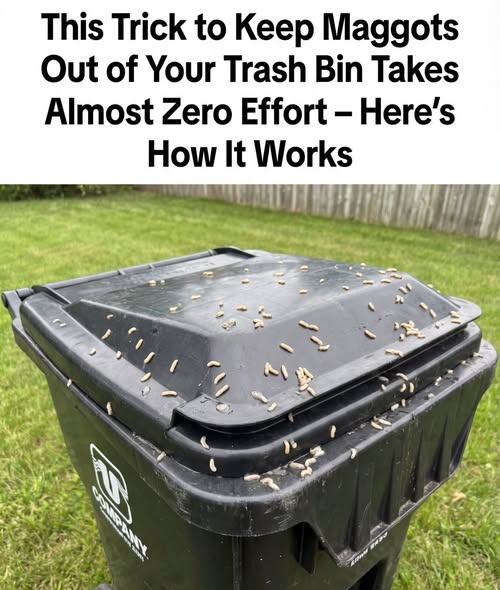
Opening a trash bin and discovering maggots is one of those moments that triggers an immediate visceral reaction—disgust, panic, and the instinct to shut the lid as fast as possible and walk away. The sight of small white larvae writhing through food scraps feels invasive, as though something unsanitary has crossed an invisible boundary in your home. Yet as unsettling as maggots are, their appearance is not random, nor is it a sign of laziness or poor hygiene. Maggots are simply the larval stage of flies, responding predictably to environmental conditions that unintentionally invite them in. Warm temperatures, moisture, and exposed organic waste create an ideal breeding ground, often without anyone realizing it has happened. Flies can lay eggs silently and efficiently, and within a matter of hours, what looked like ordinary trash can transform into a problem that feels overwhelming. Understanding that this process is biological rather than personal is the first step toward regaining control. Maggots do not appear out of neglect; they appear because nature is responding to opportunity, and once that opportunity is removed, the problem resolves just as quickly.
The real cause of maggots lies in the simple relationship between flies and decomposing organic matter. Flies are highly sensitive to scent and are especially drawn to protein-rich waste such as meat scraps, fish remains, dairy products, and greasy leftovers. When trash bags are loosely tied, lids do not fully seal, or liquid accumulates at the bottom of the bin, flies find an ideal environment to lay hundreds of eggs at once. Warm weather accelerates the entire cycle. Heat speeds up decomposition, intensifies odor, and shortens the egg-to-larva timeline, sometimes to less than twelve hours. This is why maggot infestations are far more common during summer months or in bins placed in direct sunlight. Left untreated, maggots do more than cause visual discomfort. They can spread bacteria, intensify odors, attract additional pests, and create a self-sustaining infestation that becomes harder to eliminate over time. Understanding this chain reaction is crucial, because stopping maggots is not about reacting to the larvae themselves, but about breaking the conditions that allowed them to appear.
Once maggots are present, immediate and decisive action is necessary to stop the infestation from spreading or returning. The most effective solutions rely on heat, dryness, and sanitation. Pouring boiling water directly into the bin kills maggots instantly and helps loosen organic residue clinging to plastic surfaces. For outdoor bins, a diluted bleach solution can be used safely to disinfect the interior, provided it is never mixed with vinegar or ammonia. For those who prefer gentler options, white vinegar combined with baking soda creates a powerful reaction that breaks down residue while discouraging flies from returning. After killing the larvae, all trash should be removed immediately, sealed in double bags, and disposed of. The bin should then be scrubbed thoroughly with hot, soapy water, paying special attention to seams, grooves, and the bottom where liquids often collect unnoticed. Finally, the bin should be left open to dry completely in direct sunlight. Dryness is critical, as moisture allows surviving eggs to hatch later. While this cleanup process is unpleasant, it resets the environment entirely and removes the conditions maggots depend on to survive.
True prevention begins once the bin is clean, and it depends on managing moisture, odor, and access consistently. Food waste should always be wrapped securely, especially items that decay quickly. Lining trash bags with newspaper or paper towels helps absorb moisture and reduce scent, making the bin far less attractive to flies. In warmer months, taking trash out more frequently dramatically reduces the window of opportunity for egg-laying. Freezing especially smelly waste—such as meat packaging or seafood scraps—until trash day is a highly effective but often overlooked strategy. Flies cannot access frozen waste, and odor remains minimal until disposal. Keeping bins in shaded areas lowers internal temperature, slowing decomposition and reducing fly activity. Just as important is ensuring lids close tightly. Even small gaps or warped plastic can provide enough access for flies to enter and lay eggs. Repairing or replacing damaged bins may seem minor, but it plays a crucial role in long-term prevention.
Natural deterrents offer an additional layer of protection without relying on harsh chemicals. Flies are highly sensitive to strong scents, and placing bay leaves, eucalyptus, cedar chips, or mint inside trash bins can discourage them from lingering. Essential oil sprays made with peppermint, eucalyptus, or tea tree oil diluted in water can be applied weekly to bin interiors to mask food odors and repel insects. Baking soda sprinkled at the bottom of the bin absorbs moisture and neutralizes smells before they become noticeable. Even a quick weekly rinse prevents residue buildup that often goes unnoticed until it becomes a problem. These small, low-effort habits create an environment that flies simply do not find appealing. Prevention does not require perfection, only consistency. A bin that stays dry, sealed, and lightly maintained rarely becomes a breeding ground.
Ultimately, maggots thrive where opportunity meets warmth and moisture, but they disappear just as quickly when those conditions are removed. A trash bin does not need to be sterile to remain pest-free; it simply needs to be managed with awareness. Maggots are not a reflection of cleanliness or carelessness, but of biology responding to favorable conditions. Once those conditions change, the cycle ends. By combining prompt elimination with simple preventive habits, you can ensure that your trash bin remains what it should be: an ordinary, forgettable household item rather than a source of dread or disgust. With the right routines in place, opening your bin will no longer trigger anxiety—only the quiet satisfaction of knowing the problem has been handled permanently and effectively.