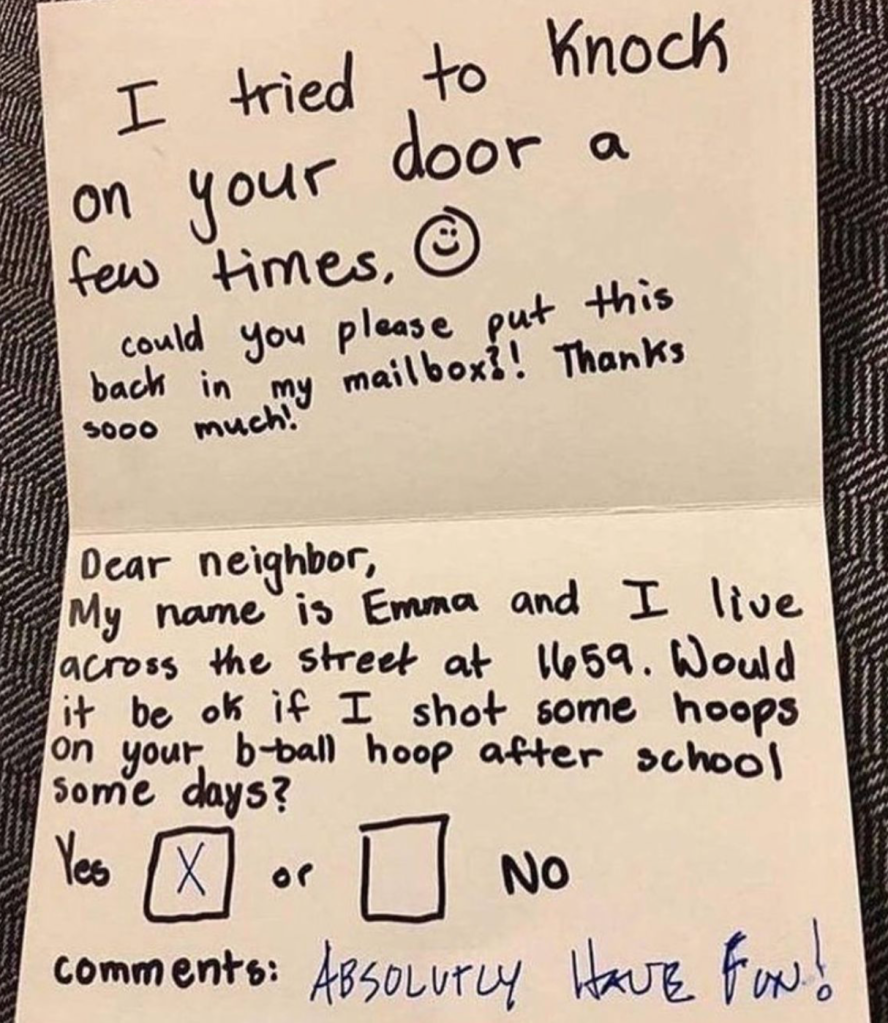
The story centers on a small but meaningful interaction that highlights the power of simple human connection. A young girl named Emma noticed that her neighbor had a basketball hoop in their driveway and felt inspired to use it. Rather than assuming permission or ignoring boundaries, she chose a thoughtful and respectful approach. After attempting to catch her neighbor in person without success, she turned to a handwritten note—an old-fashioned yet sincere method of communication that reflects both patience and consideration. Her decision to ask, rather than take, sets the tone for a story grounded in courtesy and mutual respect.
Emma’s note itself is a reflection of innocence and politeness. Written on a plain card, she introduced herself, explained where she lived, and clearly asked for permission to use the basketball hoop after school. Adding a “check yes or no” option made the request simple and approachable, showing her awareness of how to make it easy for the neighbor to respond. This small detail carries significance, as it demonstrates not only her manners but also her effort to communicate thoughtfully. In a time when digital messages often replace personal interaction, her handwritten note stands out as something genuine and heartfelt.
The neighbor’s response matched Emma’s kindness with equal warmth. By checking “yes” and encouraging her to “Have Fun,” the neighbor not only granted permission but did so in a way that reinforced positivity and trust. This brief reply, though simple, reflects a willingness to engage with others in a friendly and supportive way. It also shows how easily a small act of generosity can create a sense of connection between people who may not know each other well. The exchange required little effort, yet its emotional impact is significant, illustrating how kindness often thrives in ordinary moments.
Beyond the interaction itself, the story highlights the importance of respect and communication within a community. Emma’s choice to ask first acknowledges the value of personal property and boundaries, while the neighbor’s response demonstrates openness and goodwill. Together, these actions create a small but meaningful example of how neighbors can coexist with consideration and trust. It reinforces the idea that positive relationships are often built on simple gestures rather than grand actions, and that mutual respect plays a key role in fostering a sense of belonging.
The emotional appeal of the story lies in its simplicity. There are no dramatic events or complex conflicts—just a child’s polite request and an adult’s kind response. Yet this simplicity is precisely what makes it powerful. In a world where negative news and conflict often dominate attention, moments like this serve as reminders that kindness still exists in everyday life. They show that people are often willing to respond positively when approached with respect and sincerity, and that even brief interactions can leave a lasting impression.
Ultimately, the exchange between Emma and her neighbor reflects a broader message about human connection. Small acts of kindness, whether it’s writing a note or granting permission, can strengthen community bonds and create positive ripple effects. The story encourages others to embrace similar behaviors—asking with respect, responding with generosity, and recognizing the value of everyday interactions. While the moment itself may be brief, its impact extends beyond the driveway, serving as a reminder that kindness does not need to be grand to be meaningful.