You Must Choose Only One Beach House to Live In Forever, and the One That Feels Like Home Quietly Reveals Your Emotional Priorities, Personality Strengths, Hidden Longings, Relationship Patterns, and the Way You Define Peace, Freedom, Success, and Belonging

You Must Pick Only One Beach House To Live In For The Rest Of Your Life: Your Answer Reveals Everything About You
By

Imagine this simple but powerful scenario: you are allowed to choose only one beach house to live in for the rest of your life. No upgrades, no switching later, no second homes. Just one place, one view, one rhythm of life.

At first, it sounds like a fun fantasy. But the truth is, the house you’re drawn to says a lot about your inner world—your values, your emotional needs, and how you see happiness.

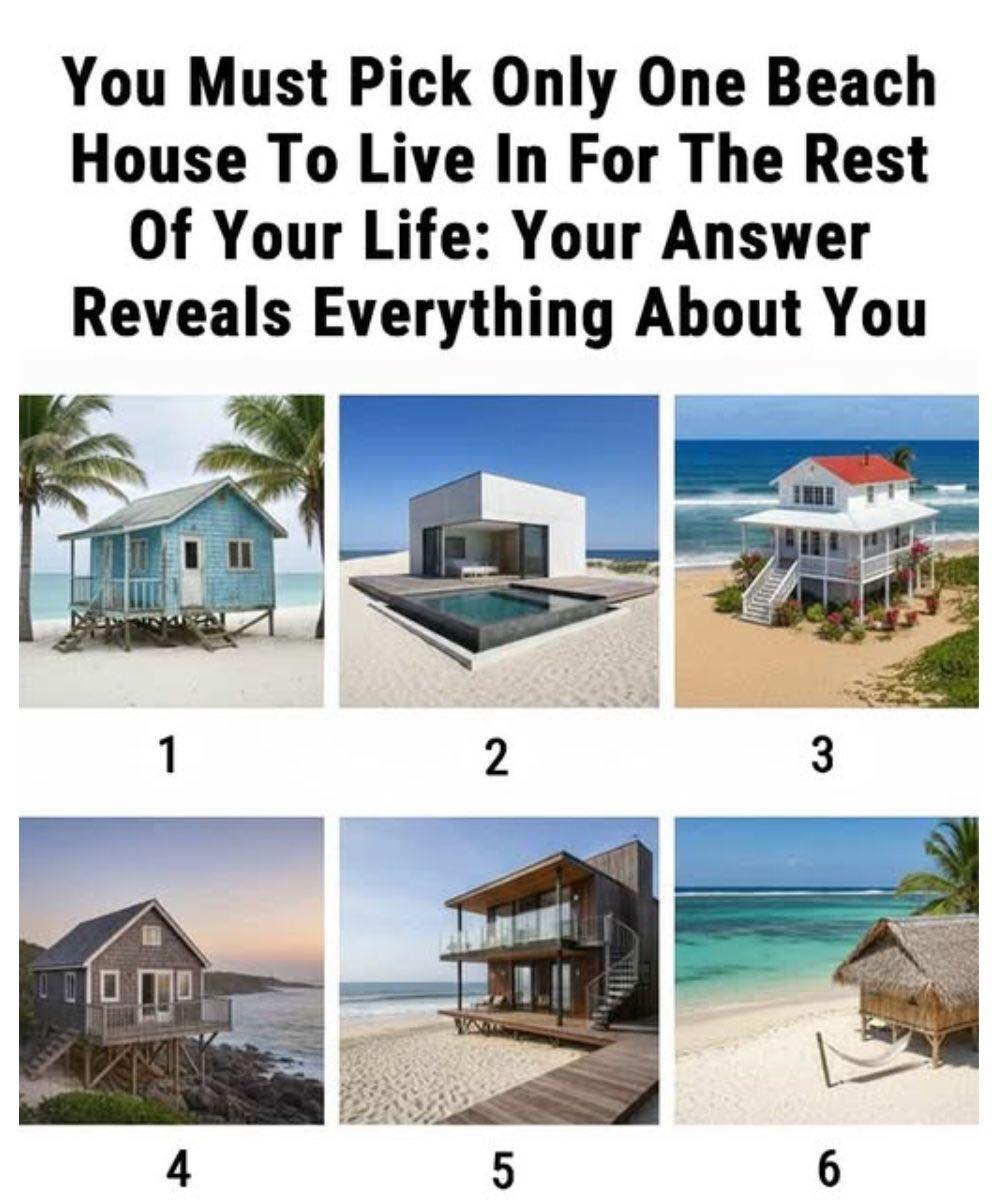
Take a moment. Look at the six beach houses. Don’t overthink it. Which one feels like home to you?

Now, let’s explore what your choice might reveal.

🏝️

 House 1: The Cozy Tropical Hut

If you chose House 1, you are someone who values simplicity, warmth, and emotional safety. You don’t need luxury to feel fulfilled. What matters to you is peace, connection, and feeling grounded.

You likely enjoy slow mornings, deep conversations, and a life that feels human rather than impressive. You may be nostalgic by nature and find joy in small, meaningful routines. For you, happiness is quiet—not loud.

🏖️

 House 2: The Minimalist Modern Retreat

Choosing House 2 suggests you crave clarity, control, and mental space. You appreciate clean lines, open areas, and a sense of order—both in your surroundings and in your thoughts.

You are likely analytical, independent, and forward-thinking. Emotional drama drains you, and you feel most at ease when life is efficient and intentional. You believe less clutter creates more freedom, and you design your life carefully rather than impulsively.

🌊

 House 3: The Classic Beachfront Home

If House 3 is your pick, you are a balance seeker. You value tradition, comfort, and shared experiences. You want a life that feels stable but still joyful.

Family, friendships, and memories matter deeply to you. You enjoy hosting, celebrating milestones, and building a life that others can gather around. You’re emotionally generous and often act as the anchor for the people you love.

🌬️

 House 4: The Elevated Rustic Escape

House 4 attracts those who are introspective, resilient, and quietly strong. You are not afraid of solitude, and you often do your best thinking when you’re alone.

You may have been through challenges that taught you self-reliance. Nature helps you reset, and you don’t mind being slightly removed from the crowd. You value authenticity over approval and depth over popularity.

🌅

 House 5: The Luxury Glass Beach House

Choosing House 5 reveals ambition, confidence, and a desire to fully experience life. You appreciate beauty, success, and environments that reflect how far you’ve come.

You are motivated, expressive, and likely comfortable being seen. This doesn’t mean you’re shallow—it means you believe life should be lived boldly. You want comfort, inspiration, and a setting that reminds you every day that you deserve abundance.

🌴

 House 6: The Secluded Overwater Hut

If House 6 calls to you, you are a dreamer and an escapist at heart. You long for freedom, emotional peace, and a life far from noise and expectations.

You may feel overwhelmed by modern pressure and crave a slower, more soulful existence. You value emotional intimacy over social quantity and often imagine a life where time stretches gently rather than rushes.

Final Thought

There is no “right” choice. Each beach house represents a different definition of happiness—and each one is valid.

The real question isn’t which house is better.
It’s what kind of life you’re truly longing for.

Sometimes, a simple choice reveals more about us than a thousand questions ever could.

magine being offered a choice that seems simple but carries far more emotional weight than it first appears. You are allowed to choose only one beach house to live in for the rest of your life. There will be no upgrades, no seasonal changes, no second chances, and no future swaps when your preferences evolve. This single space will frame your mornings, your relationships, your solitude, and your sense of home for decades to come. At first, the idea feels like a pleasant fantasy, something pulled from a travel magazine or a passing daydream. But when you pause long enough to actually choose, something interesting happens. You begin to notice which house feels calming, which one excites you, and which one feels quietly uncomfortable. Those reactions are not accidental. The environment we imagine ourselves living in reflects how we regulate emotions, how we define happiness, and what we believe a good life should feel like. Without realizing it, this choice reveals whether you seek safety or stimulation, connection or independence, stability or expansion.

For some people, the pull toward a cozy tropical hut is immediate and undeniable. This kind of home represents emotional warmth rather than status, comfort rather than display. People drawn to this space often value simplicity and emotional safety above all else. They do not need extravagance to feel fulfilled, and in fact, too much luxury can feel overwhelming or empty. What matters most is the feeling of being grounded, of waking up in a place that feels familiar and human. These individuals often find happiness in small rituals: slow mornings, shared meals, conversations that linger without urgency. They may be nostalgic by nature, deeply sentimental, and highly attuned to emotional atmosphere. For them, peace is quiet, not dramatic. They tend to prioritize meaningful connection over external achievement and often create environments where others feel welcome, safe, and seen.

Others feel most at home in a minimalist modern retreat, drawn to clean lines, open space, and intentional design. This choice often reflects a desire for mental clarity and emotional control. People who gravitate toward this type of home usually value independence and efficiency, and they are sensitive to clutter—both physical and emotional. They tend to be analytical thinkers who feel most comfortable when life is organized and purposeful. Emotional chaos drains them, and they often create structure as a way to protect their energy. These individuals are rarely impulsive; instead, they design their lives carefully, believing that freedom comes from intentional choices rather than excess. They are forward-thinking, self-sufficient, and often deeply private, needing space to think clearly and exist without constant emotional demands.

The classic beachfront home appeals strongly to those who seek balance. This choice reflects a personality that values both stability and joy, tradition and warmth. People drawn to this type of house often place great importance on relationships, shared experiences, and memory-making. Family and close friendships matter deeply, and they often enjoy hosting, celebrating milestones, and creating spaces where people gather naturally. These individuals tend to be emotionally generous and dependable, often serving as the emotional anchor in their circles. They find fulfillment in continuity—traditions, rituals, and shared history—and they are motivated by the desire to build a life that feels meaningful not just to themselves, but to the people they love.

Some are drawn instead to an elevated rustic escape, slightly removed from the world, surrounded by nature and open air. This choice often signals introspection, resilience, and quiet strength. People who choose this type of home are usually comfortable with solitude and may even require it to feel balanced. They often do their deepest thinking alone and are not afraid of distance from noise, trends, or social pressure. Many have lived through experiences that taught them self-reliance, and they value authenticity over approval. Nature serves as a reset for them, offering clarity and grounding that social environments cannot always provide. These individuals are often thoughtful, observant, and deeply self-aware, preferring depth over popularity and meaning over visibility.

The luxury glass beach house speaks to a very different emotional landscape. Those drawn to this home often value ambition, expression, and the full experience of life. They appreciate beauty, achievement, and environments that reflect growth and success. This does not mean they are superficial; rather, they believe that comfort and inspiration are deserved and motivating. These individuals are often confident, expressive, and comfortable being seen. They may enjoy recognition not because they seek validation, but because they view life as something to be lived boldly and fully. They want their surroundings to reflect how far they have come and where they are going. Abundance, for them, is not excess—it is evidence of effort, vision, and self-belief.

Finally, there are those who feel most drawn to a secluded overwater hut, far from crowds and expectations. This choice often reveals a deeply introspective, imaginative, and emotionally sensitive nature. People who choose this space are often dreamers at heart, craving freedom, emotional peace, and distance from constant stimulation. They may feel overwhelmed by modern demands and long for a slower, more soulful existence. Emotional intimacy matters far more to them than social quantity, and they tend to form deep bonds with a small number of people. Time, for them, is something to be stretched gently rather than rushed. They often imagine a life where presence matters more than productivity and where peace is not something to earn, but something to protect.

At its core, this exercise is not about architecture or lifestyle fantasy. It works because imagined spaces mirror emotional needs. The house that feels like home reflects how you cope with stress, what kind of happiness you trust, and what you believe you need to feel fulfilled. There is no right or wrong choice—only different definitions of peace, success, and belonging. Sometimes, a simple imagined decision reveals truths that direct questions never reach. The real insight is not which house is better, but what kind of life your heart is quietly asking for—and whether you are listening.

Related Posts

House Approves Housing for the 21st Century Act, Aiming to Increase Affordable Housing Nationwide, Streamline Construction Processes, Encourage Denser Development, Address Long-Term Housing Shortages, And Provide Future Opportunities for Families Struggling With Rising Rents, Though Critics Warn Immediate Relief Remains Limited

The U.S. House of Representatives recently advanced a significant piece of legislation, the Housing for the 21st Century Act, sparking discussion across political and economic circles. Advocates…

How Quick Wit, Clever Retorts, and Unexpected Humor Transform Everyday Conflicts, Awkward Situations, and Minor Disagreements Into Memorable, Amusing Moments While Reminding Us That Timing, Intelligence, and Playful Banter Can Bring Joy, Surprise, and Connection Across Generations and Relationships

Clever responses often lead to unexpected and humorous outcomes which remind us of the power of humor and quick thinking in our daily interactions. Most times, well-timed…

How Letting My Son Choose His Father After Divorce Led to Silence, Heartbreak, and Lessons About Love, Trust, Emotional Distance, and Parenting While Learning That Letting Go Doesn’t Always Mean Losing, but Sometimes Reveals the Hidden Struggles Children Face Behind Closed Doors

When my 14-year-old son, Mason, told me he wanted to live with his dad after the divorce, I said yes. Not because my heart agreed—if it were…

How Standing Firm on My Father’s Inheritance and Refusing to Let Money Dictate Love Taught Me the Value of Boundaries, Self-Respect, and Emotional Independence While Revealing That a Partner’s True Intentions Are Tested by Wealth and Life-Altering Decisions

When my dad passed away last year, he left me his house and some savings. It was bittersweet — I was heartbroken over losing him, yet deeply…

How Setting Firm Boundaries, Protecting My Emotional Well-Being, and Refusing to Reopen Old Wounds After Years of Abandonment Led to Unexpected Understanding, Reconciliation, and the Recognition of Strength, Self-Respect, and Emotional Growth in the Midst of Complex Family Dynamics and Challenging Relationships

Years ago, my husband walked out of my life without hesitation. He left when his mistress became pregnant, and from that day on, I became both mother…

How Learning to Say No, Setting Boundaries, and Protecting Myself for the First Time Quietly Transformed a Lifetime of Exhaustion, Changed Family Dynamics, Revealed Hidden Emotions, Fostered Understanding, and Opened the Door to Healing, Respect, and Self-Compassion in Unexpected Ways

as long as I can remember, I’ve been the one people lean on when everything falls apart — the dependable one, the problem-solver, the one who shows…

Leave a Reply

Your email address will not be published. Required fields are marked *