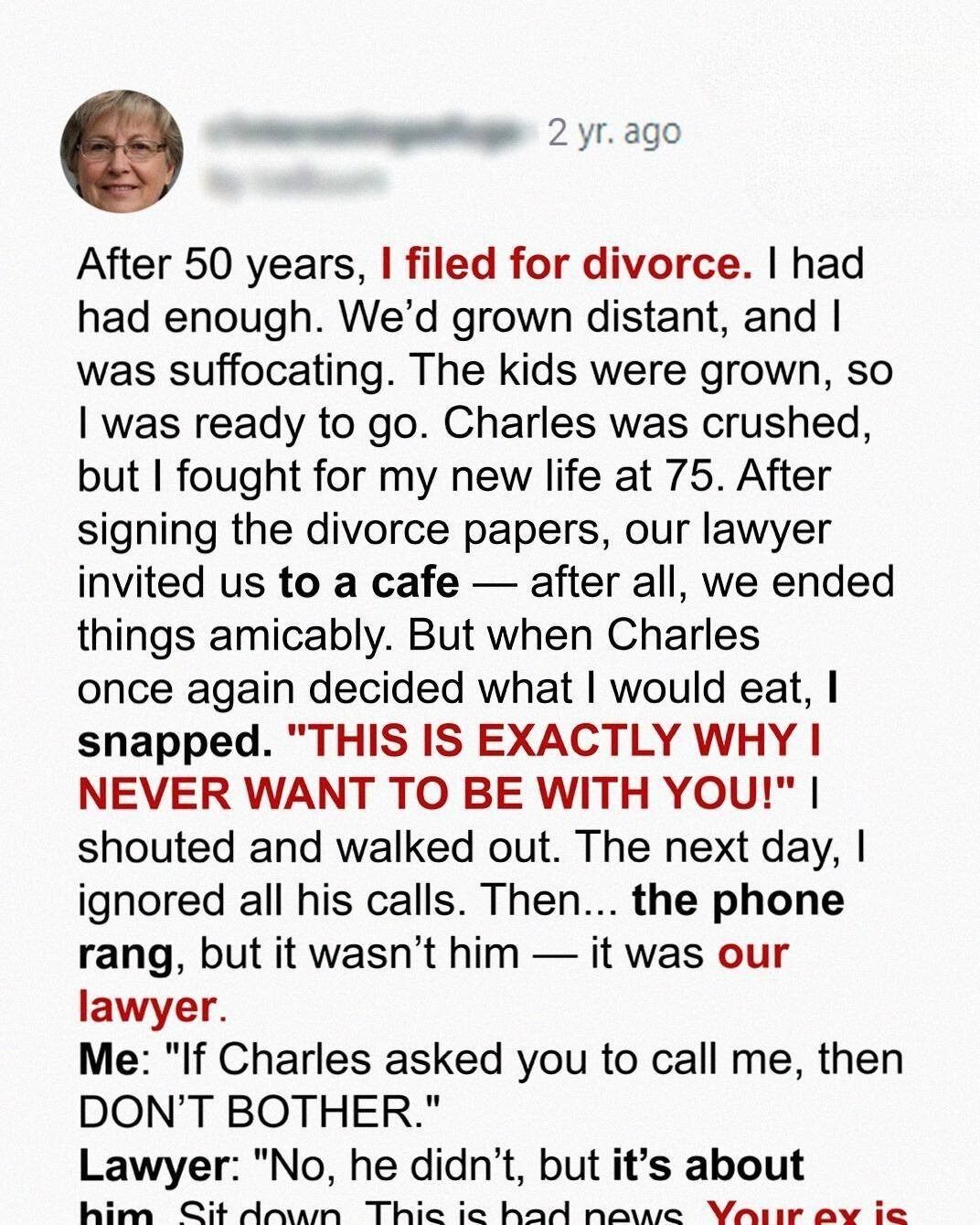
Rose and Charles had shared fifty years of life together, a marriage admired by friends, neighbors, and even casual acquaintances. To the outside world, their life seemed seamless—filled with shared routines, mutual respect, and decades of memories woven together in a tapestry that looked effortless. Yet inside, Rose felt invisible. At seventy-five, she realized she had spent her entire life tending to others—her children, her husband, her household—without truly discovering who she herself was. The restlessness she felt was no fleeting dissatisfaction; it was a fire that had been smoldering for decades. When she confided in her sister, she described a life spent giving and caring, leaving almost nothing for herself. The weight of decades of self-neglect became unbearable, and she began to pull away from Charles emotionally. After much internal struggle, she made a decision that shocked everyone: she asked for a divorce, convinced that leaving the life she had known for half a century was the only path to freedom. Charles, true to his lifelong quiet nature, did not protest or beg. He simply agreed, believing her happiness mattered more than his pride or attachment. To Rose, his calm acquiescence confirmed her worst fear—that he didn’t care about losing her after fifty years together.
Two months later, they arranged a final dinner at the restaurant where Charles had proposed so many years before. What should have been a sentimental farewell instead escalated into tension. Charles did exactly what he had done for decades—without fanfare or insistence, he dimmed the lights at the table and ordered a small salad for Rose, assuming she’d enjoy it. To her, this was unbearable. She interpreted his gestures as controlling, evidence that he had spent their entire marriage treating her like someone to manage rather than a partner to love. A wave of anger overtook her; she stood abruptly, leaving the restaurant, the dinner, and the life they had built behind. Returning to her empty apartment, she felt justified in her decision. She believed she had finally escaped a man who had dictated every detail of her life, freeing herself from decades of subtle dominance.
That night, Charles quietly sat down and wrote a letter that would alter the course of both their lives. In shaky handwriting, he explained his actions: the lights were dimmed because he knew she squinted in bright spaces and often got headaches. The salad was ordered because he remembered she disliked tomatoes and often forgot to tell waiters to remove them. Fifty years of meticulous attention to the smallest details, he wrote, had been his way of showing love, not control. He left the letter on her nightstand, unaware that later that night he would suffer a massive heart attack. The vulnerability in his note, combined with the urgency of mortality, imbued the words with a weight Rose could not ignore. When she arrived at the house to gather clothes for the hospital, she found the letter. Reading it, she realized the truth: Charles’s quiet care, the gestures she had misread as controlling, had been a constant thread of devotion, patience, and love spanning five decades.
At the hospital, Rose sat by Charles’s side, holding his hand, whispering apologies, and reflecting on her misconceptions. She understood that love is not always loud or demonstrative; it often hides in small, consistent acts of attention and sacrifice. Charles had never restrained her; he had quietly supported her life, attending to details she hadn’t even recognized. When he awoke, the moment of clarity led them to a life-changing decision: they tore up the divorce papers and committed to rebuilding their relationship with a new understanding. The following years were marked by conscious choice, deeper communication, and appreciation for the quiet, sustaining love that had endured for half a century. They renewed their vows under the old oak tree in their yard, a symbolic and literal reaffirmation of a partnership that had always been strong, even when misunderstood.
The letter became Rose’s most treasured possession, a tangible reminder of the depth and complexity of enduring love. Even after Charles passed away peacefully, she carried it in her pocket, drawing strength and understanding from its message. It reminded her that love is not about escaping another person to find oneself, but about discovering freedom, acceptance, and identity within the shared intimacy of a committed relationship. The story of Rose and Charles illustrates that lifelong partnerships require perception, patience, and the humility to see beyond surface appearances. What may seem controlling can often be care; what may feel distant can in fact be profound attentiveness.
Their story also underscores the quiet power of communication, even when delayed or indirect. A single letter, written in vulnerability, bridged decades of misunderstanding. It serves as a testament to the idea that gestures, intentions, and attention to detail—when offered consistently over time—can have immense emotional impact. Sometimes, love waits patiently, unnoticed, for the moment it can finally be understood. Rose and Charles’s marriage, strengthened by insight, reflection, and empathy, became a model for how devotion can survive misunderstanding, grow through clarity, and transform relationships even in the later stages of life.
Decades of quiet attention were mistaken for control.
A heartfelt letter clarified intentions and illuminated love long unseen.
Misunderstandings can threaten relationships, but empathy restores connection.
Small acts of care often hold deeper meaning than visible gestures.
Open communication, even delayed, can save relationships on the brink.
True love allows freedom, understanding, and lifelong partnership to flourish.