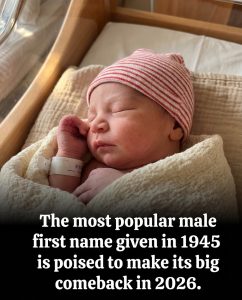
Baby names rarely change overnight, yet they often reveal subtle shifts in how societies see themselves. As 2026 approaches, specialists contributing to the Official Book of First Names have noticed a quiet but telling transformation in parental preferences. The era of hyper-unique spellings, invented syllables, and trend-heavy global names appears to be slowing. In its place, many young parents are turning backward rather than forward, searching through family trees, old novels, and historical records for names that feel grounded and sincere. This movement is not driven by nostalgia alone, but by a growing desire for meaning and emotional security in uncertain times. In a world shaped by rapid technological change, social instability, and constant digital noise, choosing a baby name has become an act of intention. Parents are increasingly drawn to names that feel familiar without being overused, names that carry a sense of continuity rather than novelty. This shift suggests a broader cultural longing for stability, where names serve as anchors connecting children to something enduring.
At the heart of this revival stands an unexpected contender: Marcel. Once a staple of earlier generations, Marcel gradually slipped out of fashion, becoming associated with grandparents, great-uncles, and sepia-toned photographs. For decades, it was considered dated, rarely appearing on birth announcements or classroom rosters. Yet that long absence has proven to be its greatest strength. Free from recent trend cycles, Marcel now feels refreshed rather than recycled. Parents encountering it today are not weighed down by contemporary associations, allowing the name to be reimagined. It sounds warm and human, familiar yet distinctive, offering character without excess. Unlike names that spike quickly and fade just as fast, Marcel carries a quiet resilience. Its return feels organic, not forced, signaling a shift away from names chosen to stand out and toward names chosen to endure.
This resurgence fits neatly into a broader “neo-vintage” movement already reshaping birth records across several countries. Names once dismissed as unfashionable—Augustin, Léonie, Eugène, Colette—are steadily reclaiming space in nurseries and classrooms. These names share common qualities: historical depth, linguistic clarity, and emotional softness. They evoke a slower pace of life, one rooted in storytelling and tradition rather than algorithms and trends. For parents navigating a world of constant updates and reinvention, such names offer reassurance. They feel complete, as though they have already lived full lives and proven their worth. Marcel, in particular, stands out for its balance. It is neither ornate nor plain, neither overly romantic nor starkly modern. Its simplicity allows it to blend effortlessly into diverse cultural and linguistic environments.
Another reason for Marcel’s appeal lies in its versatility. It travels well across borders, recognized and pronounced easily in many languages without losing its essence. This global familiarity is increasingly important in a connected world where families often cross cultures and continents. Yet unlike many internationally popular names that feel generic, Marcel retains a strong sense of individuality. It suggests intelligence without arrogance, creativity without pretension, and warmth without informality. The name does not demand attention; it invites it gently. For parents who value empathy, emotional intelligence, and quiet confidence, Marcel feels like a natural extension of those ideals. It allows a child’s personality to take center stage, rather than being overshadowed by a name designed to impress.
By 2026, experts predict Marcel will become a defining symbol of this thoughtful naming renaissance. Its rise is not marked by sudden spikes but by steady, consistent growth, indicating long-term appeal rather than fleeting hype. Parents choosing Marcel are often motivated by values rather than aesthetics alone. They speak of wanting names that age gracefully, that suit both childhood and adulthood, that sound equally natural in a playground and a professional setting. Marcel satisfies these expectations with ease. It carries history without heaviness and elegance without extravagance. In doing so, it reflects a modern mindset that values substance over spectacle, depth over novelty.
Ultimately, the return of Marcel suggests something deeper than a cyclical trend. It reveals how parents are redefining what it means to name a child in the modern era. Names are no longer just identifiers; they are expressions of hope, character, and belonging. Choosing Marcel is less about reviving the past and more about reclaiming timelessness in a fast-moving world. It represents a desire to give children something solid to stand on—a name that feels like a quiet promise rather than a loud statement. In that sense, Marcel is not simply making a comeback. It is being welcomed back as a name that belongs naturally to both memory and possibility, equally at home in history and the future.
Summary
As 2026 approaches, parents are increasingly choosing classic names that offer meaning and stability over fleeting trends. Marcel’s quiet revival reflects a broader neo-vintage movement, revealing a cultural shift toward timeless, value-driven naming rooted in authenticity, continuity, and emotional depth.